 +39
+39 info@air-fashion.com
 Enter
Enter

TIE-ON POCKET INSTEAD OF A HANDBAG: HOW WOMEN CARRIED EVERYTHING THEY NEEDED LONG BEFORE ACCESSORIES
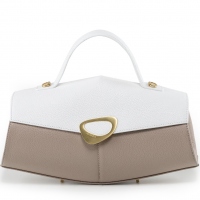 ARCADIA |
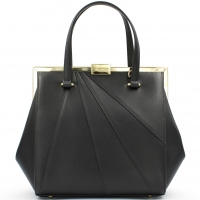 Cromia |
 Cuoieria Fiorentina |
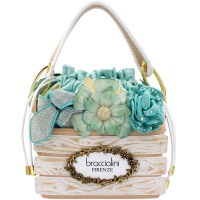 Braccialini |
 Cuoieria Fiorentina |
|
Long before the handbag became an essential part of the female look, its role was played by a very different item: the detachable, or tie-on, pocket. These pockets appeared as early as the seventeenth century and for a long time remained a convenient and practical way for women to carry everything they needed. In essence, they were the true forerunners of the modern bag. While the male wardrobe had long since adopted sewn-in pockets, things unfolded quite differently in women fashion. Women relied on separate fabric pockets tied at the waist and worn beneath their skirts. Most were elongated or pear-shaped and had an opening at the top or front that made it easy to reach the contents. Sometimes they were worn singly, sometimes in pairs, and at times several at once.
There is also an intriguing hypothesis: outer hanging pockets may have taken shape in the Protestant world, in a culture where restraint, practical usefulness and domestic purpose were especially valued. Unlike court fashion, which focused on silhouette, luxury and ornament, what mattered here was not the accessory visual impact but its function. A pocket like this was less about decorating a dress and more about serving its wearer: it allowed women to carry money, keys, small tools and everything needed for everyday life. At first it looked plain, simple and even severe — an object created not for display, but for real use. The main virtue of such a pocket was its convenience. It was not tied to one particular dress: it could be removed, retied to another garment, tucked into a drawer or hung over the back of a chair. For women who needed to move constantly, work around the house, run errands or travel, that mattered enormously. In more formal settings the pocket disappeared beneath the petticoats, while in everyday life, especially for working women, it could sit closer to the apron so that everything needed stayed literally within reach.
The size of these pockets was often surprisingly generous. Many surviving examples show that they could hold far more than one might expect. These were not delicate trifles for decoration, but truly functional repositories for personal belongings. They were made from a wide range of materials, from plain linen to leather and costly fabrics. Some looked extremely modest, while others were embellished with embroidery, ornament, floral motifs and even the owner initials. In other words, this object combined practicality with personal style.
Significantly, the very logic of this kind of pocket did not disappear even after the French Revolution. At the turn of the eighteenth and nineteenth centuries women fashion changed sharply: lightweight high-waisted dresses, a new elongated silhouette and tiny reticules — the first truly fashionable mini bags of the new age — entered the wardrobe. Yet the tie-on pocket did not vanish with the old costume. On the contrary, it continued for a long time as a familiar and practical way to carry everything necessary.
So what did women actually carry in these pockets? Judging by historical evidence, the contents were remarkably varied. They held money, keys, thimbles, scissors, pin cushions, folding knives, handkerchiefs, notes, small work tools, spectacles and even modest valuables. For servants, keys in the pocket were a sign of trust from their employers. For traders, working women and shopkeepers, the pocket became a mobile working kit containing everything needed for everyday tasks. For many women the pocket was also a space of personal security. In an era when they had far fewer opportunities to store property separately and safely, the most valuable things were carried on the body. Women tucked away purses, jewellery, watches, documents, keepsakes, letters and other items they did not want to display. The pocket performed several functions at once: it protected, concealed, organised space and offered a sense of independence.
The familiar stereotype that women pockets were nothing more than a chaotic jumble of everything is, in fact, challenged by historical sources. On the contrary, women often distributed their belongings very deliberately: some items in one pocket, others in another, so that whatever was needed could be found quickly. It was not chaos, but a useful system perfectly adjusted to the rhythm of everyday life. There is another side to the story of these pockets as well. Their concealed position made them useful not only for storing ordinary objects, but also for hiding what one wished to keep out of sight. That is precisely why references to pockets appear so often in court records: in cases of theft, loss and other incidents, documents carefully listed what had been inside them. Thanks to such records, we can understand today how significant this object was in women daily life. Over time detachable pockets began to disappear. The reason lay not only in the spread of handbags, but also in the transformation of women clothing itself. Dress silhouettes changed, skirts were cut differently, construction methods evolved, and wearing a bulky pocket beneath clothing became ever less practical. Gradually this format lost its everyday necessity and fell out of use. And yet the idea itself never disappeared. The history of the detachable pocket reminds us that the need for comfortable, roomy and functional pockets has always existed. In many ways, the debate over why women clothing still offers so few truly useful pockets has been going on for more than a century. Which is why the old detachable pocket can be seen not merely as a domestic detail from the past, but as a symbol of female independence, practicality and the right to keep everything necessary close at hand. |